
Top Maldives Water Villas Worth Your Money in 2026
Discover the best overwater bungalows in Maldives. Expert picks on luxury water villas, real costs, and what actually makes them worth booking.
You’ve probably scrolled past a dozen Maldives water villa photos this week alone. Glass floors, infinity pools, turquoise water stretching to the horizon. Here’s what those photos don’t tell you — most travellers pick the wrong resort for the wrong reasons, then wonder why a USD 2,000-per-night stay feels ordinary.
I’ve spent years working with luxury travel clients booking Maldives honeymoon resorts and anniversary trips. The patterns are predictable. People choose based on Instagram appeal or package deals that sound premium but deliver average experiences. We’ve watched clients return disappointed not because the resort was bad, but because it was wrong for what they actually wanted from a Maldives water villa experience.
Let’s clear up what matters and what’s just marketing noise.
Myth One: All Overwater Bungalows in Maldives Are Basically the Same
Walk into any travel forum and you’ll see this assumption everywhere. Overwater villa equals luxury, right? Glass floor, ocean view, done.
Wrong on every level that matters.
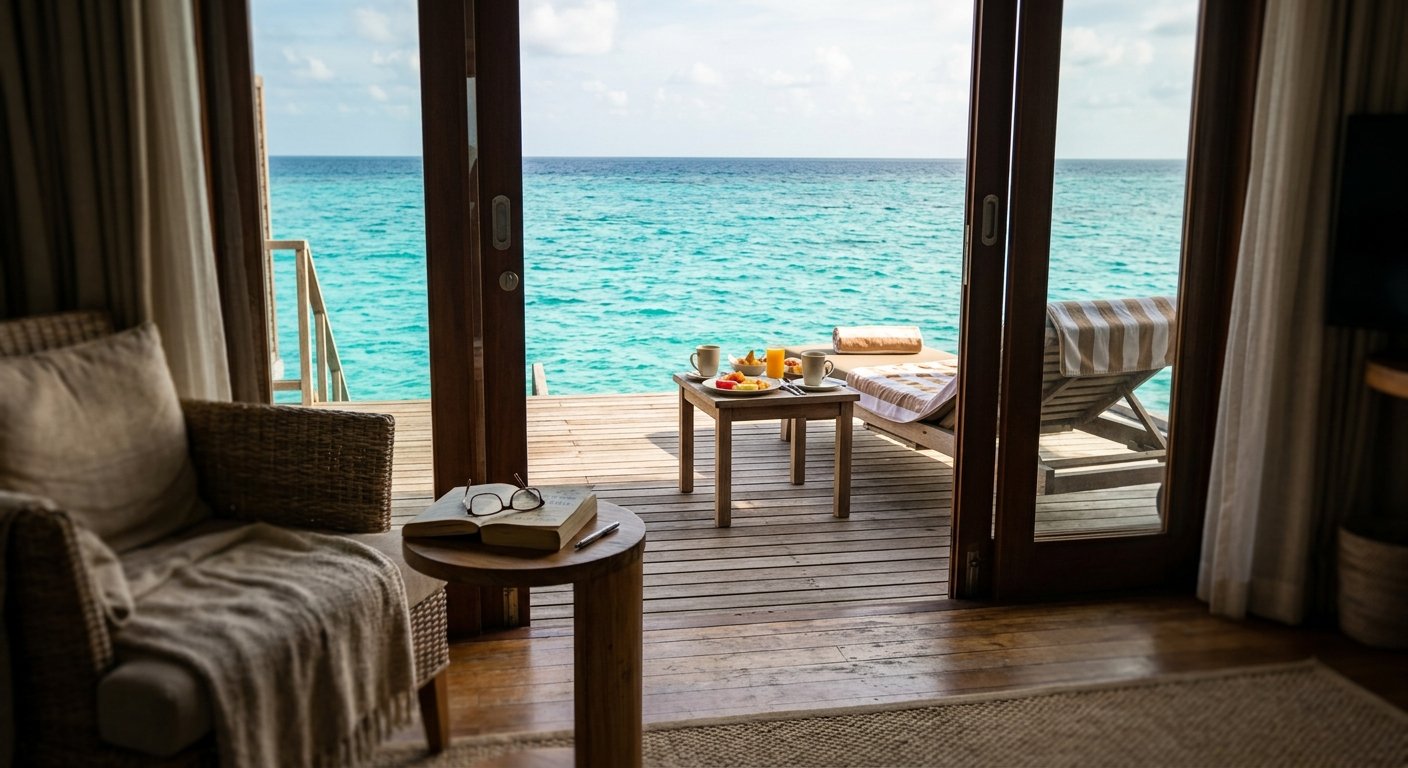
A water villa at a mass-market resort chain and one at a boutique property like Gili Lankanfushi aren’t even playing the same sport. The difference isn’t just thread count or champagne brands. It’s spatial design, privacy angles, marine life density beneath your villa, noise insulation between units, and whether your deck actually catches sunrise or just glaring afternoon heat.
Here’s what we learned the hard way. Three years back, a client booked what looked like an identical overwater setup to another resort we’d recommended. Same price bracket, same Booking.com rating, same aerial photos of stilted villas. She came back livid. Why? Her villa sat 40 metres from a busy water sports centre. Jet skis all morning. Parasailing boats circling her “private” deck every afternoon. The photos weren’t lies — just shot at 6am before operations began.
The best water villas in Maldives solve for things you don’t see in photos. Soneva Jani puts serious distance between each villa — not just 10 metres of symbolic separation, but actual acoustic and visual privacy. Waldorf Astoria Maldives Ithaafushi angles every deck so you’re not staring at your neighbour’s breakfast. Those details cost real money to engineer, and they separate forgettable stays from the ones people talk about for years.
Pay attention to villa orientation, not just square footage. A 150-square-metre villa facing west will cook you alive by 3pm. A smaller 100-square-metre unit facing northeast stays cool, catches morning light, and gives you usable deck space all day. Tour operators rarely mention this. They should.
Myth Two: Bigger Resorts Mean Better Amenities
This one trips up first-time visitors constantly. The logic sounds reasonable — 100-villa resort has more restaurants, more activities, more options than a 40-villa property. Must be better value.
Not how it works in practice.
Large resorts in the Maldives often feel like floating shopping malls. You’re sharing reef access with 200 other guests. Restaurant bookings need advance planning. That dreamy house reef everyone raves about? It’s got snorkelling traffic jams at 10am. I’m not exaggerating. We’ve had clients report literally waiting in line to enter the water at popular reef entry points during peak season.
Smaller properties deliver what luxury travellers actually pay for — exclusivity without effort. Take Milaidhoo Island Maldives. Just 50 villas total, maybe 15 of those overwater. You’re not competing for attention, reef space, or sunset photo spots. Staff remember your name by day two because they’re not juggling hundreds of faces. The house reef isn’t pristine because of location luck — it’s protected because guest volume stays low enough that the ecosystem isn’t constantly stressed.
I worked with a couple last year who’d done both. First trip, they’d booked a 200-villa resort because “more facilities.” Second trip, a 45-villa boutique property. Their words, not mine: “The big resort felt like a nice hotel that happened to be on water. The small one felt like we’d rented an island.”
More restaurants don’t matter when half require reservations three days out and the good tables vanish by noon. More “activities” don’t matter when you’re spending a week doing absolutely nothing — which, let’s be honest, is why most people book a Maldives luxury resort in the first place.
Myth Three: House Reefs Are Overrated Compared to Excursions
Here’s where marketing does real damage. Resorts push diving trips, snorkelling excursions, swimming with whale sharks — all the stuff that costs extra and sounds impressive on an itinerary. House reefs get a line or two in the brochure, maybe a stock photo.
Backwards priority.
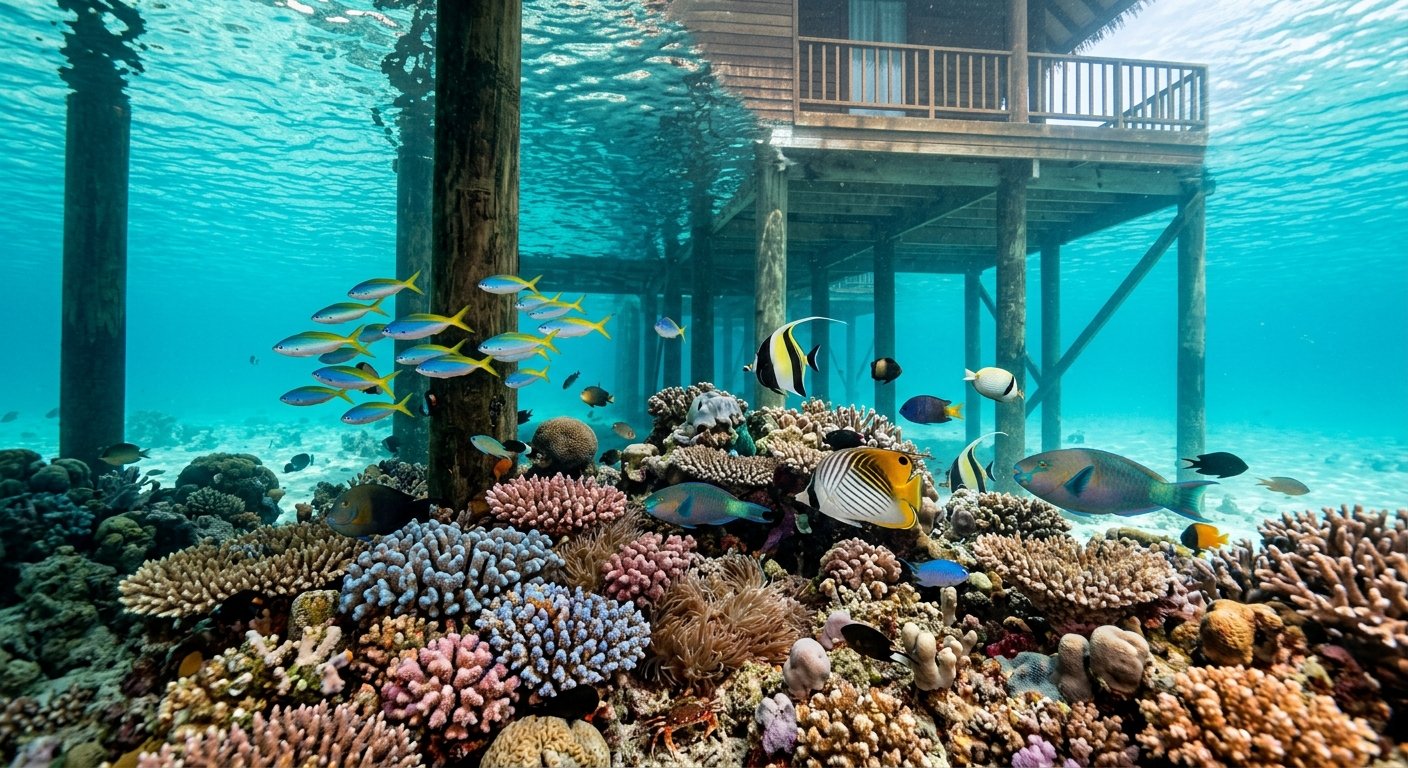
Your house reef is the single biggest differentiator between an exceptional overwater bungalow experience and an expensive photo opportunity. Not exaggerating. If the reef directly beneath and around your maldives water villa is dead, sandy, or sits 50 metres offshore requiring a boat transfer, you’ve bought a pool with ocean views. Nice, sure. Worth USD 1,500 a night? Questionable.
The best water villas in Maldives sit directly above thriving coral systems where you can drop off your deck into two metres of water and see turtles, reef sharks, rays, and hundreds of species without a guide, a boat, or a schedule. Anantara Kihavah does this brilliantly. So does Conrad Maldives Rangali Island on the right villa categories. You wake up, grab a mask, step off your ladder, and you’re swimming through an aquarium before you’ve had coffee.
We learned this watching client feedback patterns. The ones who raved about their trips and immediately started planning return visits? They’d stayed at properties with exceptional house reefs. The ones who said “it was beautiful but we probably won’t go back”? Decent resorts, mediocre reefs. They’d spent thousands getting to remote dive sites when the real magic should’ve been 10 steps from their bed.
One couple told us they snorkelled their house reef 11 times in six days. Every session different. Different light, different tide, different marine activity. That’s not luck — that’s biodiversity you can only get when coral health is genuinely prioritised and guest density stays controlled. Excursions are great for bucket-list moments, but house reef access is daily value you’ll actually use.
Before you book any resort, pull up Google Earth and look at the reef structure around the island. You can see coral coverage, lagoon depth, and whether villas actually sit over water or on stilts above sand. Travel agents won’t do this for you. You should.
What Actually Makes a Maldives Water Villa Worth the Premium
Let’s talk price reality because the range is absurd. You can find overwater accommodation from USD 400 per night up to USD 15,000 for ultra-luxury. That’s not a typo. St. Regis Maldives Vommuli Resort and Soneva Jani have villas that hit five figures per night during peak season.
Most people don’t need the USD 15,000 option. But you shouldn’t settle for the USD 400 one either unless you understand exactly what you’re giving up.
Mid-tier pricing — roughly USD 800 to USD 1,500 per night — is where value lives if you pick carefully. That range gets you genuine overwater architecture, not retrofitted platforms. It gets you space, decent reef access, and service standards that don’t require constant follow-up. It also avoids the luxury trap where you’re paying an extra USD 500 a night for a marble bathtub you’ll use once and a private butler you’ll feel awkward around.
Look for these specifics when comparing properties. Direct lagoon access from your villa without a ladder that requires gymnastic ability. Minimum 100 square metres of combined interior and deck space. Privacy screening or spacing that means you’re not watching your neighbours eat breakfast. Climate control that actually works — sounds basic, but glass walls and tropical sun create greenhouse conditions fast if the engineering is cheap.
Baros Maldives nails this balance. Not the flashiest name in the market, but their water villas deliver on function without the theatre. You’re over a healthy reef, the villas are properly spaced, and you’re not paying for features you’ll ignore. That’s smarter spending than chasing brand recognition.
Also, package inclusions matter more than base rates. All-inclusive at a Maldives honeymoon resort can swing the real cost by 40 percent either direction. If you’re paying USD 1,200 per night but meals, drinks, and transfers are separate, you’re actually closer to USD 1,800 once you’re on-site. Conversely, a USD 1,500 all-inclusive rate that covers seaplane transfers, alcohol, and dining can be cheaper overall and infinitely less stressful.
Run the full math before you book. Not just the nightly rate.
Best Water Villas in Maldives by What You Actually Want
Not every trip wants the same thing. Honeymoon couples want privacy and romance cues. Families need space and kid-safe water access. Divers want proximity to channels and marine density. Photographers want light, angles, and unobstructed horizons. Matching resort to purpose is more important than picking the “best” on some generic ranking.
For romance without performance pressure, go small and go remote. Milaidhoo and Baros both specialise in couples who want luxury without a scene. No kids, no influencers staging content, no party vibe. Just well-designed space and competent service that stays invisible until you need it. Soneva Jani works here too if budget isn’t a constraint, but you’re paying heavily for scale and the slide-from-your-villa gimmick that’s fun exactly once.
For families, you need lagoon-side villas, not deep-water ones. Lagoon water stays calm, shallow, warm, and safe for younger kids. Deep-water villas are dramatic but the drop-off can be intimidating and currents occasionally pick up. LUX* South Ari Atoll and Niyama Private Islands both handle family dynamics well without sacrificing adult comfort. They’ve also got kids’ clubs and activities that actually occupy children for a few hours, which matters more than any parent will admit before arrival.
For divers and serious snorkelers, location beats everything. South Ari Atoll, North Male Atoll, and Baa Atoll each have strengths depending on what you want to see. Baa Atoll has manta season from May through November. South Ari has year-round whale shark probabilities. Anantara Kihavah and Conrad Maldives both position well for this, with dive centres that know the local sites and can get you out efficiently without the cattle-boat experience bigger resorts run.
Photographers should look at villa orientation and how the property handles ambient light at golden hour. Overwater structures with western exposure give you sunset backdrops but harsh midday glare. Northeastern villas get soft morning light and avoid afternoon burn. Soneva Jani’s multi-bedroom water reserves have retractable roofs — ridiculous feature, but genuinely useful if you’re shooting interiors or want unobstructed star photography at night.
Match the tool to the job. Don’t book the Instagram-famous property if what you really want is sleep and silence.
How to Book Without Getting Played
Booking a Maldives luxury resort involves more landmines than it should. Rates fluctuate wildly. Packages hide costs. Direct bookings sometimes cost more than third-party agents despite the usual advice. And resort transfer logistics can add USD 800 to USD 1,500 per person if you’re not careful about seaplane versus speedboat access.
Start by confirming what the rate actually includes. Breakfast only? Half-board? Full board? All-inclusive with alcohol? The spread between these can be USD 300 per day per person. If you’re staying a week, that’s the difference between an expensive trip and a financially irresponsible one. All-inclusive makes sense at remote properties where you’re captive and resort prices run 3x to 4x normal. It makes less sense at resorts near Male where you’ve got options.
Transfer costs are the second gotcha. Seaplane transfers cost between USD 400 and USD 800 per person return depending on distance. Speedboats are cheaper — USD 150 to USD 300 — but you’re limited to resorts within 45 minutes of Male. If your resort is 150 kilometres north, seaplane is your only option and there’s no negotiating it. Factor this before you fall in love with a property. Some ultra-luxury resorts include transfers in premium packages, which can flip the value equation if you’re booking high-tier villas anyway.
Booking windows matter. Maldives resorts run serious discounts during shoulder season — late April through early July, and September through mid-November. You’re trading perfect weather guarantees for 30 to 40 percent savings and fewer crowds. May and June get rain, but it’s usually short bursts, not day-long washouts. October is statistically wetter but still entirely bookable if you’re flexible. We’ve had clients do October trips and see zero rain. Others got three rainy days out of ten. That’s the gamble.
Peak season — December through March — commands full rates and books out early. If you want Christmas or New Year at a top-tier overwater bungalow in Maldives, you’re booking 8 to 10 months ahead and paying premium. No way around it.
Use a specialist agent for your first trip. Yes, you’ll pay a service fee or they’ll take commission, but they’ll navigate the transfer logistics, package structures, and seasonal quirks faster than you will. After you’ve done it once and understand how the system works, book direct if you want. First-timers lose money trying to DIY optimize.
Sustainability Theatre Versus Actual Environmental Care
Every resort in the Maldives now has a sustainability page. Solar panels, coral regeneration programs, plastic-free commitments, sea turtle conservation. Some of it’s real. Most of it’s branding.
Here’s the filter. Look for properties that restrict guest density and have measurable reef health improvements over time. Those two factors matter more than any recycling program or bamboo straw initiative. The Maldives is fragile. Islands are low-lying, reefs are temperature-sensitive, and tourism pressure is massive. Resorts that genuinely care design around impact reduction, not guest convenience.
Soneva properties — both Jani and Fushi — take this seriously enough that it affects operations. They’ve banned plastic across the board, run legitimate waste-to-wealth centres on-site, and their marine biologists publish actual research, not PR fluff. Gili Lankanfushi has kept their reef systems healthier than neighbouring properties by maintaining low villa counts and enforcing strict guest behaviour around marine life. No jet skis, no parasailing, no reef-trampling water sports.
Compare that to resorts that claim eco-credentials but run 150 villas, daily jet ski rentals, and house reefs that look like underwater deserts. You’re not supporting sustainability. You’re supporting marketing.
This isn’t about virtue signalling. It’s self-interest. Properties that protect their reefs and marine ecosystems deliver better experiences long-term. The snorkelling stays exceptional. The underwater visibility remains high. The wildlife doesn’t vanish. You’re paying for access to an environment — make sure the resort isn’t actively degrading what you came to see.
Ask direct questions before booking. What’s your guest-to-staff ratio? How many villas total? What’s your coral cover percentage and has it increased or decreased over the past five years? Legitimate operators will answer. The others will deflect with vague commitments and promotional language.
The Itinerary Mistake Almost Everyone Makes
Here’s the pattern we see constantly. Couples book seven nights at a stunning maldives water villa. They arrive exhausted from travel, spend a day adjusting, then get bored by day four. By day six they’re counting hours until departure because they’ve run out of things to do and the resort’s restaurants have cycled twice.
The problem isn’t the resort. It’s the itinerary structure.
Maldives trips work better with movement. Split your stay between two properties if you’re doing more than five nights. Three nights at an ultra-luxury water villa for the bucket-list experience and photo moment, then four nights at a different resort with better diving, a livelier house reef, or a different atoll entirely. You get variety, avoid single-resort fatigue, and you’ll actually appreciate the luxury property more when you’re not stuck there for a full week.
Alternatively, combine resort time with a liveaboard dive trip. Three nights on a boat hitting remote sites, then four nights at an overwater villa to decompress. You’ll see more of the Maldives, get access to dive spots resorts can’t reach, and the overwater experience feels like the reward instead of the entire trip.
The worst itinerary? Seven to ten nights at one resort with no plan except “relax.” Relaxing is great for 72 hours. After that, even paradise gets repetitive. Humans aren’t built for that much unstructured downtime, and resorts know it. That’s why they push excursions hard after day three — they’ve watched this pattern for decades.
Build in intentional activity. Book a surf trip to a nearby break. Schedule a sandbank picnic. Plan a night dive or a snorkelling trip to a different atoll. Hire a photographer for a session if you’re celebrating something. Structure creates satisfaction, even on vacation.
Frequently Asked Questions
What is the best time to book a Maldives water villa for value?
Late April through June and September through mid-November offer the best balance between price and experience. You’ll see 30 to 40 percent discounts compared to peak season, crowds thin out significantly, and weather is unpredictable but rarely trip-ruining. Book three to five months ahead during these windows for maximum choice.
How much does an overwater bungalow in Maldives actually cost per night?
Real-world range sits between USD 800 and USD 3,000 per night for quality properties. Budget options exist around USD 400 but compromise on reef access, space, or service. Ultra-luxury villas at Soneva Jani or St. Regis can exceed USD 5,000 per night. Factor in transfers, meals, and activities — total daily spend often runs 40 percent above the base room rate.
Are Maldives honeymoon resorts worth it compared to other beach destinations?
If your priority is overwater accommodation and direct reef access from your villa, yes. No other destination delivers that combination at this scale. If you just want beaches and luxury, places like Seychelles or French Polynesia offer comparable experiences with less travel hassle and sometimes better value. Maldives wins on the specific experience of sleeping above a living reef system.
Do I need travel insurance for a Maldives water villa trip?
Absolutely yes. Medical evacuation from remote atolls costs tens of thousands if something goes wrong. Travel insurance should cover trip cancellation, medical emergencies including evacuation, and lost deposits if weather disrupts seaplane transfers. Maldives is remote and infrastructure is limited outside Male — insurance isn’t optional.
Which Maldives luxury resorts have the best house reefs?
Anantara Kihavah, Conrad Maldives Rangali Island, Lily Beach Resort, and Baros Maldives consistently get the highest reef health ratings. These properties have strong coral coverage, high biodiversity, and safe direct access from overwater villas. Google Earth satellite view will show you reef structure before you book — use it.
Stop Scrolling and Start Planning the Right Way
You’ve seen enough villa photos. You know what glass floors and infinity pools look like. What you need now is a property that actually matches how you want to spend a week and a booking structure that doesn’t blow your budget on hidden costs.
Pick based on house reef quality, villa orientation, and what you’ll realistically do for seven days — not what looks best on social media. Match the resort to your actual priorities, whether that’s diving, privacy, family space, or just competent service that doesn’t require management. And build an itinerary with enough structure that day five doesn’t feel identical to day two.
If you’re still stuck choosing between properties or trying to figure out whether that package rate is actually a deal, talk to someone who books these trips regularly and knows which resorts deliver versus which ones just photograph well. We’ve spent years watching what works and what disappoints. That knowledge saves you money and prevents the quiet regret of an expensive trip that felt just okay.
Get the planning right and a Maldives water villa experience delivers exactly what you’re hoping for. Get it wrong and you’ve spent a mortgage payment on a nice hotel room that happened to be over water. The difference is entirely in the details most people skip.